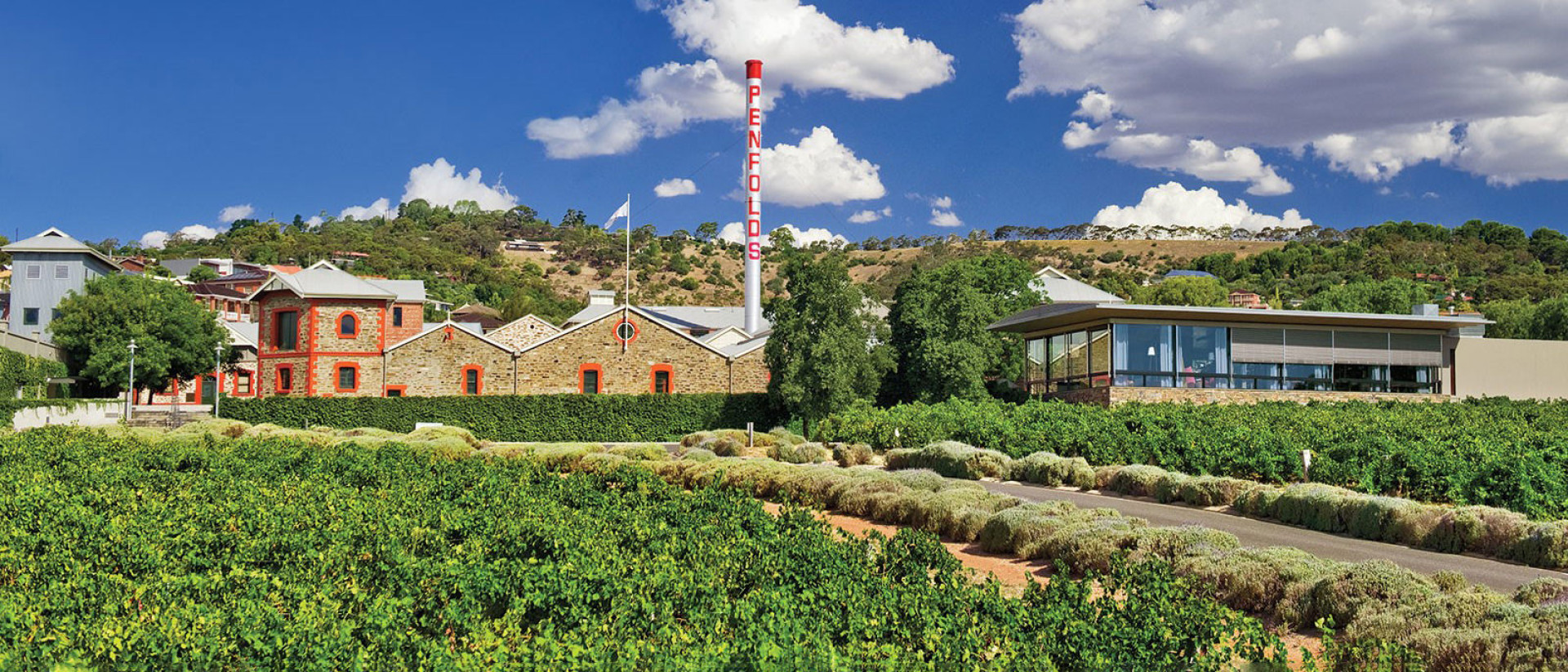
Penfolds is the only fine wine house at this price tier built on the premise that the winemaker, not the vineyard, is the signature. Almost every European icon — Burgundy, Bordeaux's classed growths, Barolo's communes — sells the soil. Grange sells the blend.
Max Schubert, the company's first Chief Winemaker, came back from a 1950 visit to Bordeaux determined to make something Australian that could age like the wines he'd tasted. His 1951 experimental Grange was poorly received and critics called it a freak. Penfolds management ordered him to stop in 1957. He carried on in secret for three vintages, hid the wine in the cellars, and only after the board tasted aged examples in 1960 was production officially restarted. Grange is now the most expensive bottle made in Australia.
Penfolds
Bin numbering, which Schubert introduced in the 1960s, applies the same idea to the rest of the range. Bin 707 is Penfolds' top Cabernet, blended across Coonawarra, Padthaway, McLaren Vale and Barossa; Yattarna does the same for Chardonnay across cool sites; even mid-range bottlings like Bin 389 and Bin 28 shift their regional composition each vintage. What stays constant is the house style — and the team behind it.
Peter Gago has been Chief Winemaker since 2002, the fourth person to hold the role. His three decades inside Penfolds is the longest unbroken continuity any Australian fine wine house can claim. Reading the Bin number on a Penfolds bottle as a vineyard clue therefore misses the point. It's a signature — and the test of Schubert's bet is whether you trust the signature more than the address on a Bordeaux label.